Key points
- The 12V battery runs the computers, locks, lights and the contactors that connect the high-voltage pack.
- A flat 12V battery stops the car going into Ready mode, even when the main pack is fully charged.
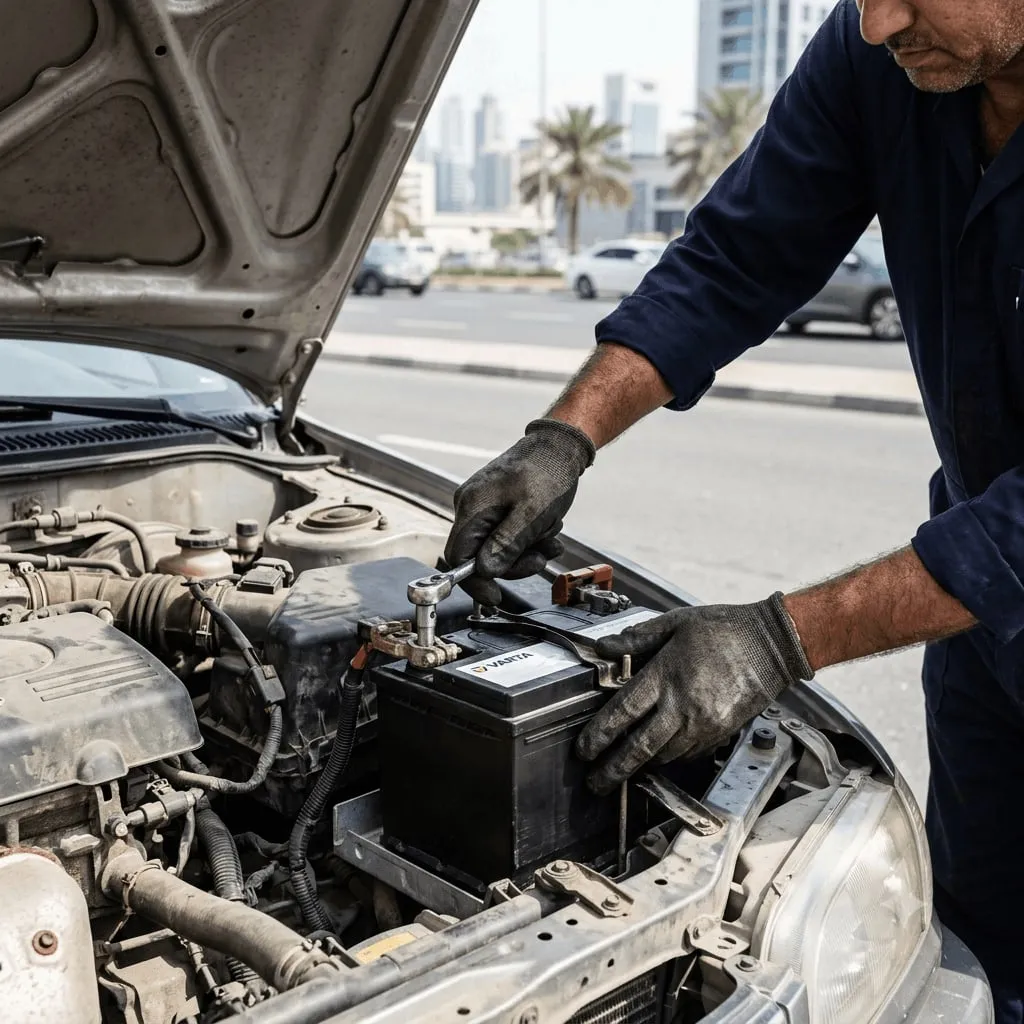
- Most hybrids and many EVs use a lead-acid or AGM auxiliary battery that can be replaced at the roadside.
- Lithium low-voltage batteries in some newer EVs are specific to the car and are not always a roadside swap.
- The 12V system can usually be boosted as the manual describes, but most hybrids and EVs should not be used as a donor car.
Why hybrids and EVs still need a 12V battery
The big battery in a hybrid or electric car works at hundreds of volts. That is right for driving the motor, but far too high for door locks, lights, screens and control units. These parts are built for the same 12V system used in petrol cars, so every hybrid and EV carries a separate low-voltage battery to run them.
There is also a safety reason. When the car is switched off, the high-voltage pack is disconnected by heavy relays called contactors. The 12V battery supplies the power that wakes the computers and closes those contactors. Once the car is in Ready mode, a DC-DC converter does the job an alternator does in a petrol car and keeps the 12V battery charged.
What the 12V battery powers
The 12V battery in a full hybrid or EV does not crank an engine with a starter motor, so it is often smaller than the one in a petrol car of the same size. Its work is steady rather than heavy. It keeps the electronics alive while the car is parked and powers them at start-up before the converter takes over.
- Control units for the powertrain, battery management and charging
- Central locking, alarm, key detection and the connection to the phone app
- The contactors that connect the high-voltage pack to the car
- Headlights, hazard lights, wipers, horn and electric windows
- Screens, instrument cluster and infotainment
- Safety electronics such as airbags, ABS and power steering control
Signs the 12V battery is failing
A weak 12V battery in a hybrid or EV does not give the slow cranking sound drivers know from petrol cars. The signs are electrical and often confusing, because the dashboard may still show plenty of charge or range in the main pack. Common signs include the following.
- The car will not go into Ready mode when you press the start button
- Black or flickering screens, or a dashboard full of warning lights
- Doors will not unlock with the key fob or the phone app
- The charging cable will not release, or the car refuses to start charging
- A message such as "12V battery low" or "auxiliary battery"
- The car works after a boost, then fails again after being parked
These signs point to the low-voltage system, but they do not prove the battery is finished. A battery drained by a light left on or by weeks of parking may recover after charging. A fault in the DC-DC converter can give the same symptoms. That is why we test the battery and the charging voltage before recommending a car battery replacement.
Lead-acid, AGM or lithium: which type is in your car
Most hybrids and many EVs on UAE roads use a conventional lead-acid auxiliary battery. Where the battery sits inside the cabin or boot, it is usually a sealed AGM type with a vent tube, and it must be replaced with the same technology. Some newer EVs and a few hybrids use a lithium low-voltage battery instead.
| Type | Where it is common | Roadside replacement |
|---|---|---|
| Flooded or EFB lead-acid | Under the bonnet of some hybrids and EVs | Usually possible once the correct size is confirmed |
| AGM auxiliary battery | Boot, under the rear seat or under the bonnet, often with a vent tube | Usually possible. The same technology must be fitted, and some cars need the new battery registered |
| Lithium low-voltage battery | Some newer EVs and a few hybrids, sometimes built into the main pack | Often a dealer or specialist job. We confirm before dispatch |
Lithium low-voltage batteries are lighter and designed for a long service life, but they are specific to the car and are not always a roadside swap. Some need software steps after fitting and some are part of the high-voltage pack assembly. If your car has one, tell us the model and year so we can say plainly what we can do.
Jump-starting a hybrid or EV
In most hybrids and EVs the 12V system can be boosted, and the owner manual shows how. Many cars have a dedicated jump terminal under the bonnet, even when the battery itself is in the boot. A boost only has to wake the computers and close the contactors, so it needs far less current than cranking a petrol engine.
- Find the jump point in the manual and follow that page, not general habit.
- Connect to the 12V terminals or the marked jump point only. Never touch orange high-voltage cables or connectors.
- Use a jump pack or a petrol donor car. Connect positive first, then the negative to the earth point the manual names.
- Switch the car to Ready and leave it on so the converter can charge the 12V battery.
- Remove the leads in the reverse order.
What we can and cannot do at the roadside
Our technician comes to where the car is stopped, at home, in basement parking or at the roadside, and starts with a battery test. For hybrids and EVs the work is limited to the low-voltage system. We do not open or repair high-voltage components, and we say so clearly if the fault is beyond the 12V battery.
What we can do
- Test the 12V battery and check the charging voltage from the DC-DC converter
- Boost the 12V system at the jump point named by the manufacturer
- Replace lead-acid, EFB and AGM auxiliary batteries with the correct size and technology, with a warranty of up to 24 months
- Check that the car goes into Ready mode and that warning messages clear after fitting
What we cannot do
- Charge, repair or replace the high-voltage traction battery
- Replace lithium low-voltage batteries that are built into the pack or need dealer software
- Repair a failed DC-DC converter or other high-voltage faults. These need a specialist workshop
When you message us, send the make, model and year, a location pin and how to reach the car. Arrival depends on location, traffic, access and the battery needed, and we give an estimate before dispatch. The service runs 24/7, with free delivery and fitting at your location.
Keeping the 12V battery healthy in UAE heat
The DC-DC converter charges the 12V battery when the car is in Ready mode and, on many EVs, while the car is plugged in and charging. A car left parked for weeks, especially in summer heat, can drain it through the alarm, the app connection and standby systems. Drive the car regularly, and book battery testing if the 12V battery is a few years old or has gone flat before.
Reviewed by technicians who test and fit car batteries across the UAE every day.