Key points
- A parked car still draws a small current. Over three or four weeks that can flatten a battery, sooner in heat.
- Test before deciding. A fairly new battery that passes needs a jump start and a full recharge, not a replacement.
- A short drive home will not refill a deeply drained battery. Drive longer or use a mains charger.
- Before travel: drive the car properly, unplug accessories and ask someone to drive it every week or two.
- Disconnecting the battery is not advised on modern cars without guidance from the manual or a technician.
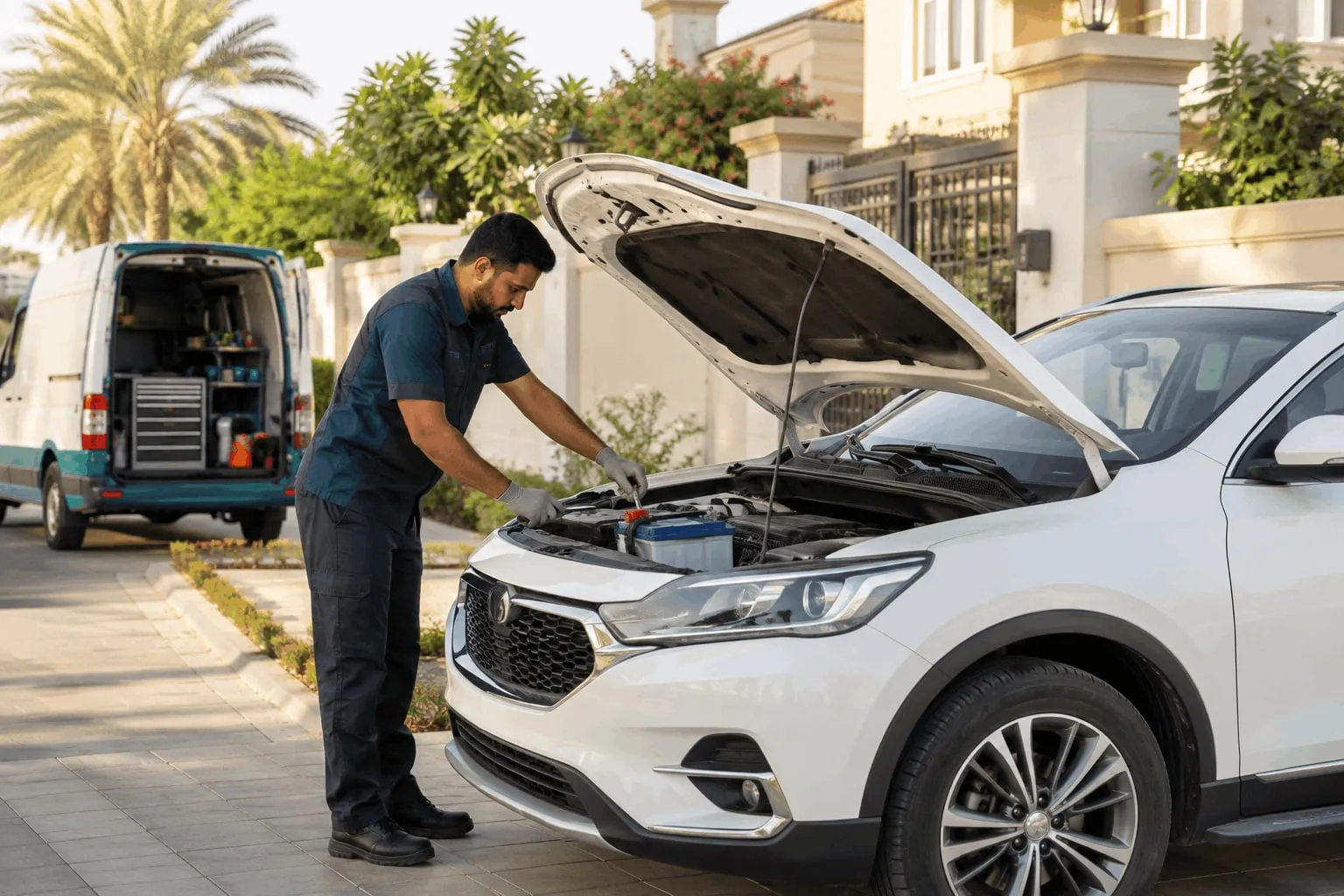
Why the battery went flat while the car was parked
Nothing in a modern car is fully off. The alarm, the central locking receiver, the clock, the telematics unit and the memory in each control module all draw a small current from the battery. Technicians call this parasitic drain. On its own it is normal and small, but over three or four weeks it adds up to a large part of the battery's capacity.
Extras make it worse. A hardwired dashcam in parking mode, an aftermarket tracker or alarm, a phone charger left in a live socket, or a boot that is not fully shut can empty a battery in days. An older battery has less capacity to begin with, so the same drain flattens it sooner than it would a new one.
What heat does to a parked battery
Heat works against a parked battery in two ways. A warm battery self-discharges faster, so it loses charge even with nothing connected. And a battery left partly or fully discharged in the heat sulphates, which permanently reduces capacity. A car left in an open car park through a UAE summer month has a harder time than one in a basement.
What to do when you land and the car will not start
If the car is dead when you get back, check the basics first. See if the dashboard lights come on at all, listen for clicking, and try the remote on the doors. If the key fob does nothing, use the mechanical key blade hidden in the fob. Do not keep cranking, since each attempt takes more from the battery.
- Share your location pin on WhatsApp, with the car park name, level and bay number.
- Give the car make, model and year so the right battery is on the van.
- Mention any height limit or access rule at the car park entrance.
- Keep your parking ticket and key ready, and wait with the car if it is safe.
800MyBatt works 24/7 across Dubai, Abu Dhabi and Sharjah, including airport long-stay and basement car parks where access allows. You get an arrival estimate before dispatch, which depends on location, traffic, access and the battery needed. Tell us if the car is parked nose-in against a wall, because that affects how the technician reaches the battery.
Jump start or replace: test first
Test first. A battery that has simply been drained by weeks of standing is not always finished. The technician measures voltage and state of health, jump-starts the car and checks that the alternator is charging. If the battery is fairly new and passes, a jump start followed by a long drive or a full recharge on a charger is the right fix.
Replacement makes sense when the battery fails the test, will not accept charge, is swollen or leaking, or was already near the end of its life before you travelled. A deeply discharged battery that has sat flat in the heat for weeks often falls into this group. A replacement is fitted on the spot, with a warranty of up to 24 months.
| Situation | Likely outcome |
|---|---|
| Fairly new battery, flat after weeks parked, passes the test | Jump start and full recharge |
| Battery flat again within days of a recharge | Check for a parasitic drain or charging fault |
| Older battery that was cranking slowly before the trip | Replacement likely |
| Swollen case, leak or rotten-egg smell | Replace. Do not jump-start |
| Car starts but the battery light stays on | Charging system check |
How to prepare the car before you travel
A little preparation prevents most of this. Take the car for a proper drive of half an hour or more in the day or two before you leave, so the battery starts the break fully charged. If it is more than two years old or has been cranking slowly, have it tested first, while there is still time to deal with it.
- Unplug dashcams, chargers and anything else in the 12V sockets.
- Check that every door, the boot and the bonnet are fully shut and the interior lights are off.
- Lock the car as normal and store a keyless fob well away from it, since some cars stay awake when the key is close.
- Ask a friend or relative to drive it for 20 to 30 minutes every week or two. Idling in the bay is a poor substitute.
- If the car stays at home near a socket, connect a smart battery maintainer suited to the battery type.
Disconnecting the battery is old advice that does not suit modern cars. It can clear window, sunroof and radio settings, upset the battery monitoring system, disable the alarm and, on some cars, make it harder to get back in. Only do it if the owner's manual describes the procedure or a technician advises it for your model.
Airport long-stay parking
Long-stay airport parking adds a few practical points. You cannot run a maintainer there, and nobody will be driving the car, so the battery's condition before you leave matters most. Choose covered parking where it is offered. Photograph the level, zone and bay number, and keep the parking ticket with you and not inside the car.
For trips longer than about a month, leaving the car at home with someone to drive it is kinder to the battery than any car park. If you do return to a dead car at the airport, message us from the bay with the details above. A jump start or roadside battery replacement can be done in the parking space where the car park allows access.
Reviewed by technicians who test and fit car batteries across the UAE every day.