Key points
- A battery warranty is cover against manufacturing defects, not against every reason a battery can go flat.
- A discharged battery is not a defective battery. It has to be recharged and tested before anyone can judge it.
- The test printout from fitting day and from the claim is the evidence that decides the outcome.
- Keep the invoice and the warranty card. The exact terms for your battery are written on them.
- Warranty length is up to 24 months, depending on the battery.
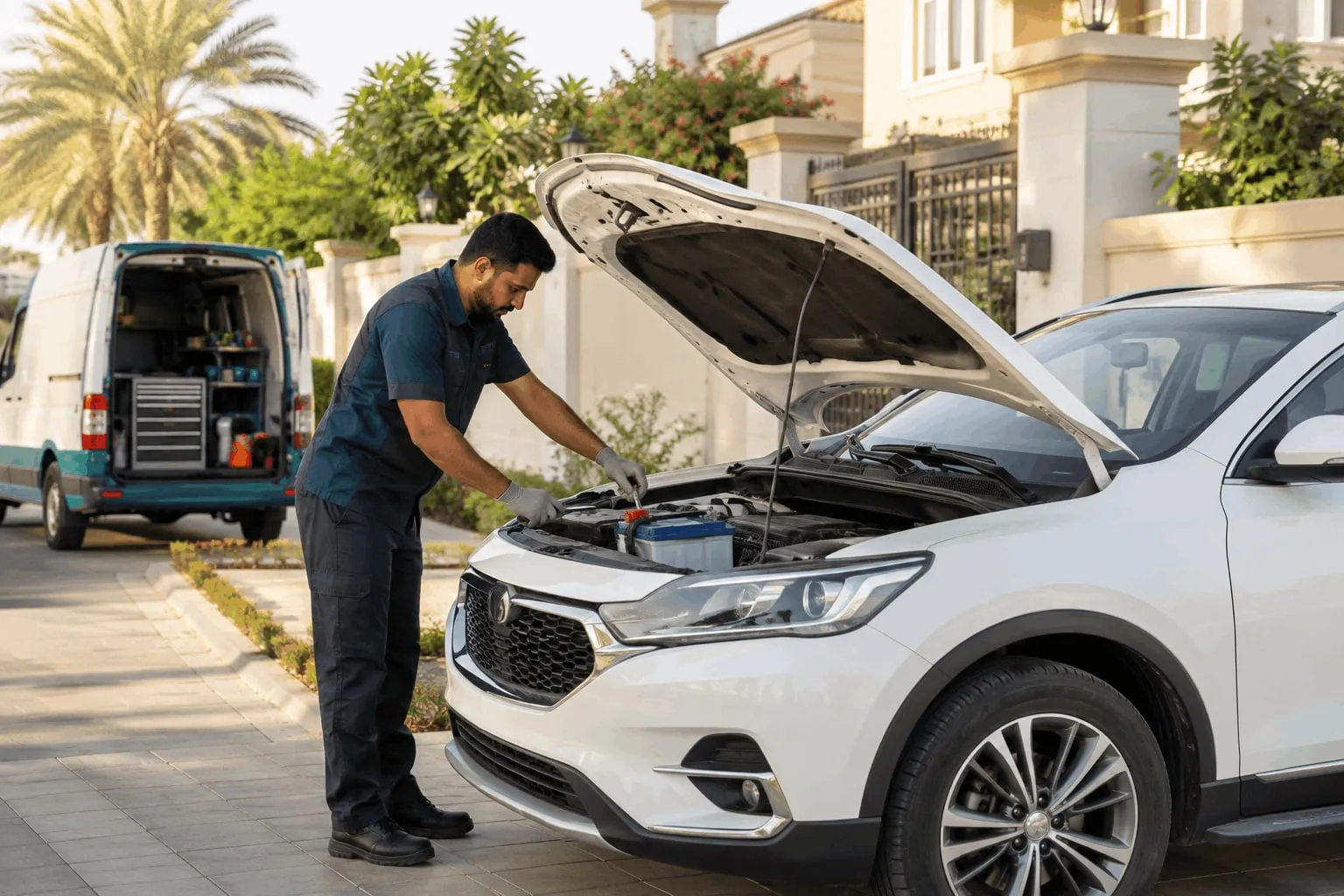
What a battery warranty covers
A battery warranty is a promise about how the battery was made. If it fails within the warranty period because of a manufacturing defect, it is replaced under the warranty terms. Typical defects are an internal short circuit, a dead cell, a broken internal connection or a case that leaks from a seam with no sign of impact.
These faults tend to show clearly on a tester. One cell reads far lower than the others, or the battery will not accept or hold charge even after proper charging, while the charging system of the car works as it should. That combination, confirmed by a test, is what a warranty is there for.
What a battery warranty does not cover
A warranty does not cover damage caused by how the battery was used or by a fault in the car. This is standard across battery brands. A battery is a consumable part that reacts to the conditions it works in, so the cause of the failure matters as much as the failure itself.
- Deep discharge: headlights, interior lights or accessories left on, or the car left unused for weeks. Repeated deep discharge causes sulphation, which is wear and not a defect.
- Charging-system faults: an alternator or regulator that overcharges or undercharges will ruin any battery, new or old.
- Parasitic drain: a module, tracker, dash cam or aftermarket accessory that draws current while the car is parked.
- Physical damage: a cracked case, broken or melted terminals, damage from an accident or from a loose hold-down clamp.
- Wrong application: a battery of the wrong type or size for the car, such as a standard flooded battery in a start-stop car.
- Tampering: opened or modified batteries, or a removed or unreadable label or serial number.
Why test printouts matter
A warranty decision rests on measurement. A digital tester records the voltage, the measured cold cranking amps against the rated CCA on the label, and a state of health result. A charging test with the engine running shows whether the alternator output is within range. Together these separate a defective battery from a discharged one or a car fault.
Ask for the result on the day the battery is fitted and keep a photo of it with the invoice. It shows that the battery was healthy and that the car was charging correctly when it left us. If a problem appears later, the new result can be compared with the first one, which makes the discussion short and factual.
How a warranty claim works with 800MyBatt
The process is the same whether the car is at home, at the office or stopped at the roadside. You do not need to remove the battery or bring it anywhere. In general terms it runs as follows, and the exact conditions that apply are the ones printed on your invoice or warranty card.
- Contact us by WhatsApp or phone with your invoice or the phone number used for the order, and describe what the car is doing.
- We test the battery and the charging system of the car.
- If the test shows the battery is defective and it is within its warranty terms, it is replaced under those terms.
- If the battery is only discharged, or the fault is in the car, we explain the result and what needs attention.
Keep the invoice and the warranty card
The invoice proves the purchase date, the battery model and the car it was fitted to. Without it, the start of the warranty period cannot be confirmed. Take a photo on the day and keep it in your phone, since paper left in a glovebox fades quickly in the heat. Keep the warranty card and the battery label intact as well.
The warranty is up to 24 months, depending on the battery. The period and conditions differ between brands, technologies and ranges, so this guide does not list them. Read what is written on your own invoice or warranty card, and ask the technician to point out the period before the battery is fitted.
How to avoid warranty problems
Most rejected claims come down to discharge or a car fault, and both can be reduced. Fit the correct type and size for the car. Have the charging system checked when the battery is fitted. If the car will stand unused for weeks, plan for it. If a warning light or slow cranking appears, get a battery test early.
Reviewed by technicians who test and fit car batteries across the UAE every day.